by Molly Owen | Feb 3, 2012 | Blog, Ruth A. Casie
 Afternoon tea is a tradition we associate with Great Britain. Traditionally, dinner was served at 8:30 or 9:00 pm – a long time after the morning meal which was served between 7:00 and 9:00 am. To fill the gap, and stop the grumblings of many tummies, tea was served.
High tea, an early evening meal, was served between 5:00 and 7:00. It included hot dishes followed by cakes and bread, butter and jam. Sometimes cold meats would also be served. For the most part, high tea was served at the dining table.
Afternoon tea, served in the late afternoon, was called low tea because it was usually served in the sitting room, salon, or library on low (coffee) tables. There are three types of Low Tea:
Cream Tea – Tea, scones, jam and cream
Light Tea – Tea, scones and sweets
Full Tea – Tea, savories, scones, sweets and dessert
The traditional time for tea in England was 4:00 or 5:00. Today tea is served in most tea rooms from 3:00 to 5:00. The menu has also changed to include three courses served in a specific order:
Savories – Tiny sandwiches or appetizers
Scones – Served with jam and Devonshire or clotted cream
Pastries – Cakes, cookies, shortbread and sweets
 On my first business trip overseas I spent the weekend in London. I had several places I want to see or experience, including the Tower of London, Warwick Castle, Hampton Court, and go to a tea room. A friend at the office surprised me and took me to tea at The Savoy Hotel. That’s where I discovered clotted cream. How delicious to bite into the warm scone slathered with cream.
I found the perfect place in my story, Knight of Runes, to include The Savoy Hotel and afternoon tea.
by Molly Owen | Dec 3, 2011 | Blog, Ruth A. Casie
 A few weeks ago I found a great post on Sapphire Phelan’s Passion Center. She had a great overview of the history of romance over the centuries. She provided insight into the etymology (origin) of words, history of romantic practices, and how love and marriage has changed over the centuries.
The need to procreate and to be close to another person hasn’t changed over the centuries. It’s part of who and what we are. What has changed is how we go about it. The romance of it all.
Sapphire’s post starts with the Greek explanation of the four types of love, philia, brotherly or familial love, eros intimate or romantic love, storge an affection or fondness and agape a selfless or spiritual love.
The definition locked down, she begins her march through time. This is what I found so intriguing. She acknowledges the brutality of the ancients raiding villages to capture wives, and moved on to the Medieval custom of arranged marriages for property, monetary and political alliances. She also provided the origin of honeymoon.
 I hadn’t realized that today’s courting rituals was rooted in medieval chivalry. “The importance of love in a relationship emerged as a reaction to arranged marriages. Still, it was not considered a prerequisite in matrimonial decisions. Suitors wooed their intended with serenades and flowery poetry… Chastity and honor were highly regarded virtues. In 1228, women first gained the right to propose marriage in Scotland, a legal right that then slowly spread through Europe.” This era saw the rise of romance in literature and on the stage, albeit only men performing.
Loves spoons were all the rage in 17th century Wales as a way for a suitor to state his case. In England, chivalrous gentlemen sent a pair of gloves to the object of their affection hoping they would wear them to church on Sunday as a sign of their acceptance. The Renaissance had its own customs keeping in mind that the main goal was to produce children.
During the Victorian Era courting was very formal and controlled. As Sapphire mentioned, “It became a sort of art form among the upper classes.” There’s a great web site by Michelle J. Hoppe that gives all the particulars for Courting the Victorian Lady.
 Today, romance still blooms. Many of the traditional methods of dating are no longer of much use to either sex these days. Though some of even the oldest ideas are still considered romantic in our times, many are not practiced simply because they do not seem to fit in our modern world. To me romance is soft and tender quiet words spoken, small things done without asking, It’s time alone as well as time with friends. It’s a touch, a kiss, a whisper, and sometimes even silence.
What is romance to you?
by Molly Owen | Feb 24, 2011 | Blog, Paty Jager

I’m currently writing the third book in my spirit trilogy series that is set among the Wallowa Lake Nez Perce. I’ve enjoyed the research about this band of the Nez Perce tribe, but with this book I have to also take into account the the army that is chasing them from their home to Canada where they hope to find freedom.
I’ve used the names of the officers in charge of each troop that skirmished with the Nez Perce on that flight, but I’ve made up the rest. And I’ve not given the places of the skirmishes names. Even though I’ve been religiously reading from four books about the trek using points of view from the Indians and the military, I’m keeping it as vague as I can so it doesn’t read like a military text book or a history text book. I’m trying to keep the story entertaining while showing both sides. (okay I am a bit more sympathetic to the Nez Perce than the army)But I’ve found the hardest part is finding ways to have the hero and heroine (he’s a cavalry officer and she’s the Nez Perce spirit) be together and make it not seem unrealistic. But she’s a spirit and can move around with the ease of a bald eagle(her spirit animal.
So my question is: Do you read historical romance for exact history or do you read for the romance and prefer the history to enhance the story rather than take it over?

Blurb for Spirit of the Mountain available now:
Wren, the daughter of a Nimiipuu chief, has been fated to save her people ever since her vision quest. When a warrior from the enemy Blackleg tribe asks for her hand in marriage to bring peace between the tribes, her world is torn apart.
Himiin is the spirit of the mountain, custodian to all creatures including the Nimiipuu. As a white wolf he listens to Wren’s secret fears and loses his heart to the mortal maiden. Respecting her people’s beliefs, he cannot prevent her leaving the mountain with the Blackleg warrior.
Blurb for Spirit of the Lake available May 2011:
Two generations after his brother became mortal, Wewukiye, the lake spirit, prevents a Nimiipuu maiden from drowning and becomes caught up in her sorrow and her heart. Her tribe ignores Dove’s shameful accusations—a White man took her body, leaving her pregnant, and he plans to take their land.Wewukiye vows to care for her until she gives birth, to help her prove the White man is deceitful and restore her place in her tribe.
As they travel on their quest for justice, Dove reveals spiritual abilities yet unknown in her people, ensnaring Wewukiye’s respect and awe. But can love between a mortal and a spirit grow without consequences?
Paty Jager
www.patyjager.net
www.patyjager.blogspot.com
buy link:http://thewildrosepress.com/index.php?main_page=product_info&cPath=177_139&products_id=4170
by Molly Owen | Oct 13, 2010 | Terry Blain
Music hath powers –

At one of our chapter meeting we had a workshop where we listened to music and wrote a paragraph or two in response to the music. This was a new experience for some of the members, but I’ve always listened to music as a background when I write. Mostly, I choose music to give me a feel of the time and period I’m writing.
The idea is to choose music that will focus you on whatever your writing. For example, the story of KENTUCKY GREEN takes place in 1794 and involves the conflict between the Indians and the American in the what was then the Ohio Territory. The hero is part Shawnee, and much of the story takes place outside, so I had a recording (which I’ve lost) of Indian flute music that also included the sound of streams and bird songs.
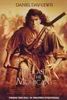 I also listened to the sound track of The Last of the Mohicans*, as the look and feel of the movie was the same as my story.
When I was doing research for writing COLORADO SILVER, COLORADO GOLD, I found a great CD. The story takes place in Durango, Colorado, and he hero of the story, who now works for Wells Fargo, grew up in a saloon. Several scenes take place in a saloon. The CD I found is Durango Saloon* 
Of course, for writing the romantic scenes, I have recordings of love songs. If there are lyrics, I tend to listen, so all the music has to be instrumental, so it just washes over me.
My current work are westerns set in Texas. And, if you’ve read my previous blog you know I love western movies*. So I have several CDs of western movie themes*.
Now, as I said, when I’m writing I can’t listen to music with lyrics. But on the way home from work, I can listen to music that will get me in the mood. Nothing like Marty Robbins* who’s most famous song is El Paso. I’ve read that his grandfather was a Texas Ranger who told him stories when Marty was a boy. And since my heroes are Texas Rangers — you get the idea.
While writing the first of three stories, one of the song lyrics gave me an idea for the next story.
 I also use several movie soundtracks as background music as I write. Gettysburg* for the epic, sweeping sounds, Quigley Down Under*, even through its set in Australia, it has that wide open spaces feeling. I like Cowboy Celtic, for the hammered dulcimer sounds.
And lest you think all I listen too is western stuff, I also used the Onigo Boingo* track of Not My Slave to represent the conflict between the hero and heroine in one of the Texas stories.
So, do you use music in your writing? How? What do you listen too?
*******
Last of the Mohicans, soundtrack, Trevor Jones and Randy Edelman
Durango Saloon, Peter Elman
The Wild West, the Essential Western Film Music Collection
Marty Robbins, #1 Cowboy, Gunfighter Ballads and Trail Songs
Cowboy Celtic, Davie Wilkie
Gettysburg, movie soundtrack, Randy Edelman
Quigley Down Under, movie soundtrack, Basil Poledoruis
Best of Boingo, Danny Elfman


 On my first business trip overseas I spent the weekend in London. I had several places I want to see or experience, including the Tower of London, Warwick Castle, Hampton Court, and go to a tea room. A friend at the office surprised me and took me to tea at The Savoy Hotel. That’s where I discovered clotted cream. How delicious to bite into the warm scone slathered with cream.


